swctools
Handling of SWC-format neuronal morphology data.
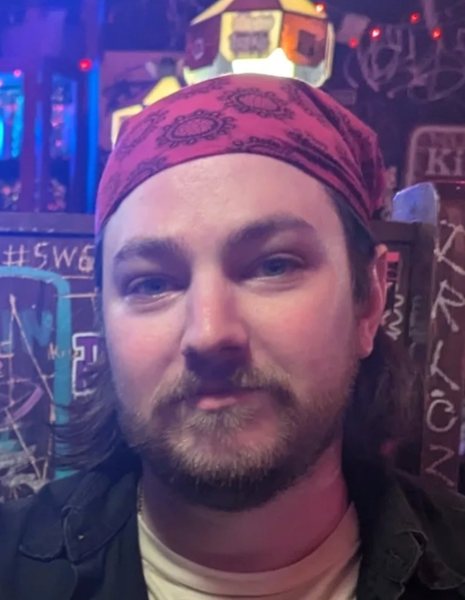
I am a computational scientist with expertise in mathematics, neuroscience, and physics.
Currently, I am a postdoctoral researcher in neuroscience at Albert Einstein College of Medicine in New York
City, where I study
neural function related to sound localization in the auditory system of the barn owl.
I received a Bachelor's of Science in Physics and Mathematics from Seattle University.
I received my PhD in computational science from the joint program between San Diego State University and
Claremont Graduate University in California.
During that program, I was supported by the USDOE Office of Science Graduate Fellowship, working in tandem with
the theoretical nuclear physics group at Lawrence Livermore National Laboratory. My dissertation focused on
data-driven methods for theoretical
nuclear physics: deep learning models for nuclear scattering data, and uncertainty quantification for
large-scale
calculations in the empirical shell model.
After graduation, I worked as a postdoctoral researcher at Argonne National Laboratory, where I developed
neural network-based improvemenets for large-scale quantum Monte Carlo simulations.
While at Argonne, I decided to transition from physics into computational neuroscience, and I had the
opportunity to do a postdoctoral fellowship at Albert Einstein College of Medicine, where I am now.
At Einstein, I have developed a robust computational pipeline for high-resolution morphology-accurate
biophysical simulation of auditory neurons in the barn owl sound-localization system.
Handling of SWC-format neuronal morphology data.
Tools for management of numerical parameters for scientific simulations.
Rocust pipeline for skeletonization of neurite meshes. See my poster about this below.
Wiki for modern computational neuroscience software organized by problem and application.
Rebuild of the pypet library for parameter sweeps and parallelization.
Framework for calculations related to quantum Monte Carlo simulations, particularly imaginary-time Green's functions. (Very specific use case, but still has pedagogical value.)
Poster presented at the American Society for Neuroscience 2025 conference.
The result of my work in the theoretical physics group at Argonne National Laboratory.
Half of my PhD dissertation. Deep learning models for nuclear scattering data.
The other half of my PhD dissertation. Uncertainty quantification of transition operators in the nuclear shell model.
My PhD dissertation.
Currently open to collaborating on interesting problems and roles.
Email: jordanmrfox@gmail.com